
What Is A LOLER Inspection: Your Comprehensive Guide
Before you continue…
-
This article is intended for general guidance only and does not constitute legal or professional advice. LOLER regulations and HSE enforcement practices can change, and individual circumstances vary significantly depending on your equipment, industry, and site conditions. Before making decisions about compliance, inspection schedules, or how these regulations apply to your business, you should consult a qualified health and safety professional or seek advice directly from the HSE. Eurocrane accepts no liability for actions taken based solely on the content of this article.
BLOG
What is a LOLER inspection and why does it matter? In today’s construction and manufacturing industries, compliance has never been more important. Stricter fines and longer penalties are very real consequences for improper lifting operations.
At Eurocrane, we don't just install, repair, and maintain industrial lifting equipment; we help companies stay compliant. We offer lifting solutions, service packages, and safety inspections to assist with your LOLER Thorough inspection and overall site safety.
Why Do You Need a LOLER Inspection
LOLER stands for Lifting Operations and Lifting Equipment Regulations 1998. These are regulations enforced by the Health and Safety Executive (HSE). But why exactly do you need a LOLER inspection?
The main function of the inspection of lifting gear is to keep your equipment compliant with UK regulations, kind of like a PAT test for your jib crane. It’s a statutory requirement that needs to be done every 6–12 months, depending on the equipment.
The LOLER lifting equipment inspection is designed to identify faults, wear and tear, and other problems that could cause an accident. It’s more in-depth than your standard maintenance checks, so it can catch what those checks miss.
Of course, there is the insurance side of things. Many insurance providers require valid LOLER certificates to make a claim, and without one, coverage might not be issued at all.
What Companies Need a LOLER Inspection
So now that we know the what and the why of a LOLER inspection, does it apply to you and your company?
There aren’t specific industries that need one by default, but commonly, the companies that need a lifting equipment inspection are:
Manufacturing, Production & Engineering: This is due to engineering machinery, metal processing, and high-end equipment manufacturing.
Automotive: If you are providing precise material handling for assembly lines.
Construction & Infrastructure: If you supply and maintain towers, gantries, and mobile cranes.
Logistics & Warehousing: For the use of bridge cranes, jib cranes, and electric chain hoists.
Energy & Utilities: Handling lifting equipment in tough environments
What Lifting Equipment Needs a LOLER Inspection?
LOLER regulations apply to a wide variety of equipment and accessories. Are you using the inspection lifting equipment that requires a check?
LOLER crane inspections: Ensuring the safety of overhead cranes, gantry cranes, and jib cranes.
LOLER hoist inspections: Examining manual and electric hoists and winches.
LOLER Lifting Accessories Inspections: Checking slings, chains, hooks, shackles, eyebolts, and other critical accessories.
LOLER Lifting Equipment Inspections: Everything from scissor lifts and forklift trucks to mobile elevating work platforms (MEWPs).
What Happens if You Operate Without a LOLER Inspection
If a LOLER inspection seems like an inconvenience or a can to be kicked down the road, it may be helpful to understand the consequences of operating without one.
Because a lifting equipment inspection primarily looks out for faults or wear and tear, skipping it can leave you open to the risk of equipment failure, leading to serious injury or even fatalities.
If that’s not enough, there are plenty of legal and financial penalties that come with ignoring the Lifting Equipment at Work Regulations 1998. The Health and Safety at Work Act gives the HSE the power to enforce compliance, which can be through fines. In the UK, these have no limit, so they can go into the millions.
In severe cases of negligence, company directors and managers can face criminal prosecution and even prison time. Plus, defending a prosecution is expensive and time-consuming.
Spending time in court isn’t the only thing that could halt your everyday operations; the HSE can force you to stop all operations until the issues are dealt with. It can also lead to voided insurance policies, making you liable for all costs. Ultimately, it also damages your reputation; it only takes one serious incident to destroy a company's name.
How often are LOLER Inspections Required?
The short answer is either 6 months or 12 months, depending on the type of equipment you are using. Not all equipment is created equally, and some need more frequent lifting equipment inspections.
Every 6 months: This applies to all lifting accessories like chains and shackles, as well as equipment used to lift people, like hoists and construction platforms.
Every 12 Months: This applies to all other lifting equipment that isn’t used to lift people, such as forklifts, cranes and trucks.
There are circumstances where you would need a LOLER inspection outside of the usual window: if there's been a major modification, an extensive repair, or reassembly at a new location. A period of disuse or damage can also trigger the need for a fresh inspection of lifting gear.
What Does a LOLER Inspection Involve
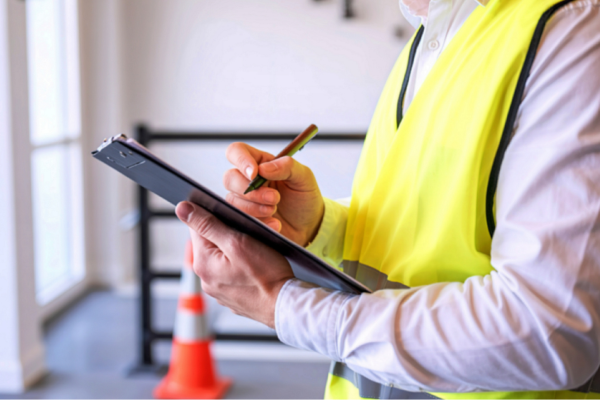
A LOLER inspection is a thorough check to make sure equipment is safe to use. This involves a mix of visual inspections, testing safety devices like brakes and alarms, and occasionally load testing, which all result in a formal report showing any defects.
What's Inspected?
The inspector is basically looking for anything that could lead to a disaster. This means checking the structural integrity and hunting for wear, corrosion or nasty damage to chains, ropes and the lifting structures themselves.
They will also put your safety devices through their paces. We are talking about emergency stops, brakes, load limiters and alarms. These are the things that need to work when things go wrong. Beyond that, they will look at operational functions to make sure controls, doors and locking mechanisms are not sticking or failing.
Lifting accessories like slings and hooks get a close look for damage, too. Ultimately, the examiner is focused on the critical parts like load-bearing points, anchors and electrical components that could cause an injury if they gave way. That is exactly why gear used for lifting people gets a much tighter inspection schedule.
Who Performs a LOLER Inspection?
An inspection needs to be carried out by a “competent person.” That’s an official term rather than just someone who is handy; they need to be up to HSE standards. This means someone with the right practical and theoretical knowledge. The person doing the LOLER inspection must also be an impartial party.
Typically, this is an insurance surveyor, a specific inspection body, or a qualified third-party engineer. To meet the impartiality rule, they can't be the same person who does your day-to-day maintenance.
What Happens if Your Equipment Fails?
Failing a LOLER inspection is definitely a headache, but it is not the end of the world as long as you handle it right.
First, you should get a report issued straight away. This is a written breakdown of the defects, ranked by how dangerous they are. The very next step is to pull that equipment out of service. You need to tag it up clearly so nobody accidentally uses it while you are getting the issue sorted.
If a defect poses an imminent danger, the independent inspector is legally required to send a copy of the report directly to the HSE. Your immediate job is to pull that equipment out of service. Follow these steps, and you have covered your back against legal fallout and safety risks.
How Do You Organise a LOLER Inspection
The first step is to appoint a competent person, an inspector with the right knowledge, like an independent engineer or an accredited body.
Next, you'll need to prepare the equipment. Have your documentation ready, clean the equipment, and make sure all accessories are available for the inspector. To make life easier, schedule some downtime so the inspection doesn’t mess up your workflow.
Once the exam is done, the inspector will give you a written report. You need to keep this for legal compliance. If any defects are found, you will need to fix them immediately.
Need Help with Your Next LOLER Inspection?
A LOLER inspection can seem daunting; the threat of safety risks and fines is enough to worry anyone. As one of the UK’s most trusted LOLER inspection companies, we can help. Our engineers are qualified and meticulous, and we can help you manage your entire inspection schedule.
Don't leave your site safety to chance. Get in touch today, and let’s get your inspection schedule sorted.
posted by eurocrane
Frequently Asked Questions about LOLER Inspections
-
A service is routine maintenance to keep your gear running smoothly, like changing oil or tightening bolts. A LOLER inspection is a legal, thorough examination by an impartial person to ensure the equipment is safe to operate. You need both to stay compliant and safe.
-
Not necessarily. If it is brand new and comes with a valid UKCA/EC Declaration of Conformity, you can use it immediately. However, if the equipment has to be assembled or installed on your site (like a gantry crane), it must undergo a thorough examination before its first use.
-
Not usually. To meet LOLER regulations, the inspector must be a "competent person" and must be impartial. If your in-house team does the daily repairs, they cannot inspect their own work for the formal LOLER report. Most companies hire a third party, like Eurocrane, to ensure there is no conflict of interest.
-
You are legally required to keep your reports on file. If you lose one, you need to get a replacement from your inspector immediately. If the HSE visits your site and you cannot produce the paperwork, you could face the same penalties as if the inspection never happened.
-
Yes. Because a forklift has a lifting mechanism, it falls under the Lifting Equipment Regulations 1998. Generally, forklifts require a thorough examination at least every 12 months, but this often drops to every 6 months if they are operating in high-intensity environments or utilising specific lifting accessories