
New Cranes vs. Second-Hand Cranes: What’s Best in 2026.
BLOG
Is buying a second-hand crane a bad idea, or have you just found a way to save a few thousand pounds?
From the latest safety features, manufacturer warranty, productivity and the depreciation and downtime that come with older cranes, in this blog, we will go through everything that could go wrong, everything that people say could go wrong but is just hype, and the various costs that could be incurred with using a second-hand crane.
Most important of all, though, we will explore what exactly the difference is between supplying a new crane vs a second-hand crane, and, ultimately, if you should buy new or buy… old.
The Pros: New Cranes vs. Second-Hand Cranes
First, the good: what benefits you get from new cranes, what benefits you get from second-hand cranes, and which one is best.
The Pros of Second-Hand Cranes
Used cranes are far less expensive than new models, but beyond the initial cost, because the most significant depreciation happens in the first few years, buying a second-hand crane means that the hit has already been absorbed, reducing the effective cost even further.
Second-hand cranes are typically in stock and ready to go, which is fantastic for urgent projects. When they arrive, they will usually have been tested thoroughly and carry a documented history of their performance.
Sustainability can also play a part in some people's decisions, with second-hand cranes supporting responsible practices by extending the lifecycle of heavy equipment.
Used machines will often have technology that is familiar to your designated competent person, which makes them easier to service.
The Pros of New Cranes
Purchasing a new crane, while it may take a little longer to arrive than a second-hand model, removes any risk of undisclosed structural or hidden damage, which in turn reduces the risk of delays caused by faults needing to be fixed.
On top of that, if the unthinkable did happen and your new crane were to break down, the manufacturer's warranty would protect your business from the steep costs that come with early-stage repairs.
When you do need new components, not only will replacements be needed less frequently with a new crane, but sourcing them is far easier, as parts will still be in production and you will not have to rely on resellers with dwindling stock of older components.
Health, safety and compliance remain major concerns in 2026, and modern cranes come with safety features like precise load moment indicators and anti-collision technology that lower on-site risk. Their newer engines also comply with stricter emission regulations, reducing both environmental impact and operating costs.
New cranes, while more expensive initially, offer an extended working lifespan. New tower or overhead cranes can last between 20 and 25 years with appropriate maintenance, and will depreciate far more slowly and more predictably than a second-hand model.
That said, the numbers can only tell part of the story. Whether a new crane is worth the premium, or whether a second-hand crane is as risky as the data suggests, often comes down to what type of crane you need and where you are buying it from, so, are second-hand cranes saving you as much as you think?
Historically, yes, but as of 2026, the market for second-hand cranes is inflating due to a general shortage of supply and a surge in demand. Cranecert states that a used overhead crane can reduce initial costs by 30 to 60 per cent.
That is a significant reduction, but do the negatives wipe out that saving?
The Cons: New Cranes vs. Second-Hand Cranes
Every purchase has its drawbacks, and cranes are no different. Here is where each option falls short.
The Cons of Second-Hand Cranes
The age of second-hand cranes makes wear and tear inevitable. Older cranes often need repairs to electrical components, radio controls and structural elements, which increases the frequency of maintenance work. IOPscience ran a study that found:
"The average age of tower cranes involved in accidents is 16.9 years; most accidents occurred with tower cranes aged about 14 years, and a large proportion (21.6%) of accidents occurred with tower cranes over 25 years old."
Manufacturers will also typically only support models for a limited period, so older cranes may become obsolete and leave you relying on second-hand parts.
If a used crane comes without certified annual inspection records such as LOLER reports, it is impossible to confirm how well it was maintained, whether it was ever overloaded, or what risk of failure it carries.
With that comes the risk of invisible damage: cracks in the boom or chassis, hydraulic leaksand other issues that only show themselves once operations begin, potentially leading to major costs from repairs and downtime that far outweigh the initial savings. A specific study by Delacontrol showcased just how steep those costs can become:
"A survey of maintenance engineers found unscheduled downtime costs an average of £5,121 per hour.”
The savings on paper can disappear quickly once a second-hand crane is put to work.
The Cons of New Cranes
Cost is one of the biggest factors affecting purchasing decisions in 2026, and cranes are no different. The market for new cranes is inflating due to a general shortage of supply. According to the industry publication Crane & Transport Briefing;
“In the last two to three years, new cranes have increased in price around 15 to 20 per cent.”
On top of the higher initial cost, new cranes experience their sharpest decline in value immediately after purchase, which can affect you if resale is something you plan to consider in the future.
Beyond cost, new cranes can also take longer to deliver, as they must go through more stringent compliance checks before arriving on site. And if a project ends or work slows down, you will still need to store, maintain and account for the depreciation of the crane regardless.
Overhead to Gantry: The Cranes Available
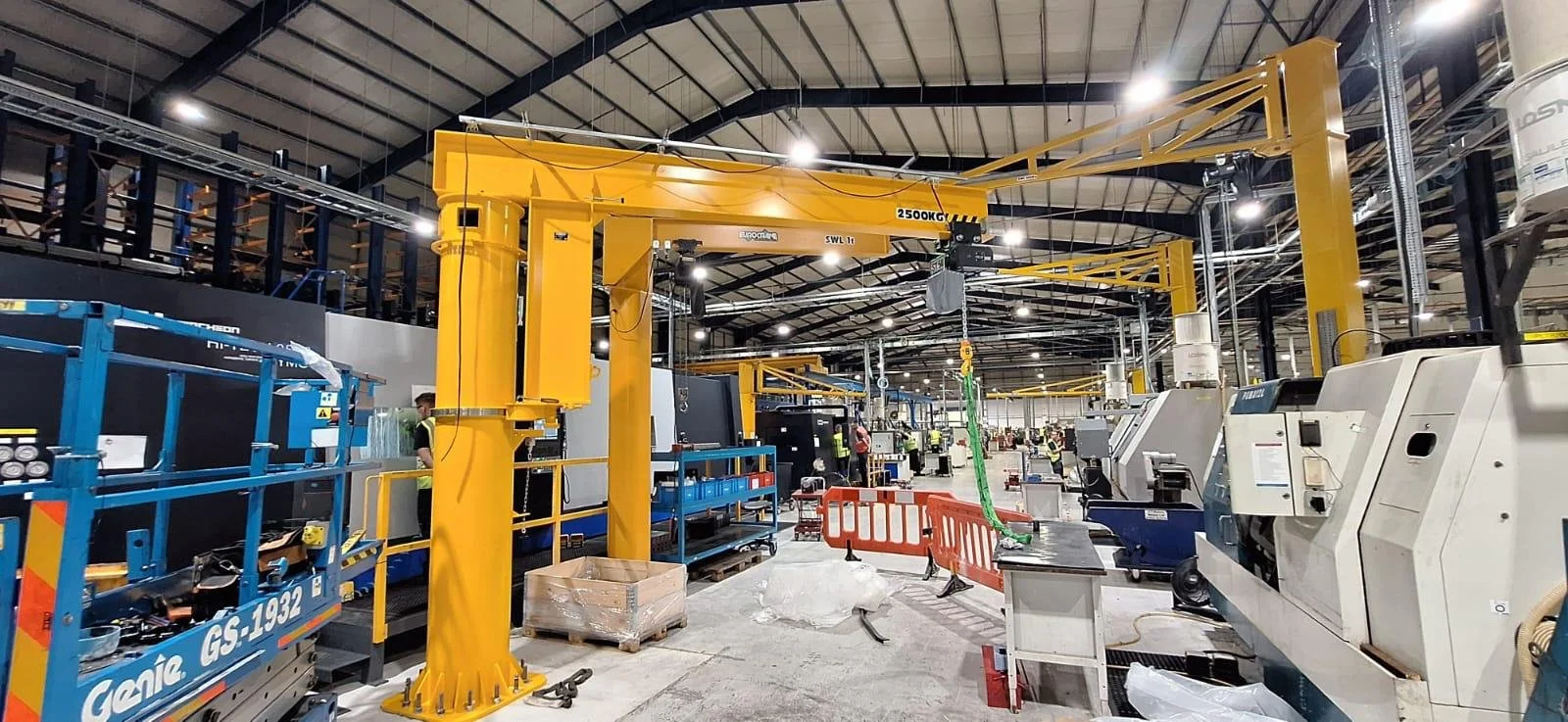
If you have made the decision to buy new, there’s plenty to choose from: a full range of new jib cranes to suit most factory and site requirements.
The Free-Standing Jib Crane is typically the most popular option. Secured directly to a concrete floor via a base plate, it requires no existing structure to mount to and can be installed within a day. Available from 80kg up to 1,000kg safe working load, with arm lengths between 2 m and 6 m and a 270-degree slew as standard, it is a cost-effective and low-maintenance solution for moving loads around a factory floor or workstation.
If floor space is a consideration, the Column Mounted Jib Crane offers the same lifting capability without the need for a freestanding pillar. Instead, the jib arm clamps directly onto an existing structural column or stanchion within the building, making it one of the most cost-effective options in the range. Arm lengths run from 2m to 6m and capacities from 80kg to 1,000kg, with galvanised finishes available for outdoor or wet environments.
For sites where both floor space and column access are limited, the Wall Mounted Jib Crane bolts or welds directly to a load-bearing wall or flat surface. With a wide range of up to 180 degrees and the same capacity options as the rest of the range, it is a practical and compact solution for workshops, loading bays and individual workstations.
Across all three crane types, Eurocrane offers a complete package from design and manufacture through to installation and commissioning, with qualified engineers available at any location across the UK.
New or Used: Which Should You Buy
While used cranes are cheaper upfront, the costs that build up over time are hard to ignore. Repairs, downtime, hidden damage, the savings you made on day one can be wiped out faster than you might expect, and in some cases, it already has been, as the HoistUK figures show.
A new crane removes all of that uncertainty. You know what you are getting, you have a warranty if something goes wrong early on, and you are not left wondering if the previous owner had a LOLER inspection. Over a working life of 20 to 25 years, the lower maintenance costs and reliability of a new crane will, for most businesses, more than cover the difference in purchase price.
That said, a refurbished crane can be a viable option if budget is the primary concern. The risk with buying second-hand is not always the age of the crane; it is not knowing what has been done to it.
A crane that has been properly stripped down, assessed, rebuilt with genuine components and certified to a high standard is a very different proposition to one that has simply changed hands. The problem is that not every seller operates that way, and without the paperwork to prove otherwise, you are largely taking their word for it.
If a refurbished crane is the route you want to take, make sure you are buying from a supplier that can show you exactly what the refurbishment process involves.
Eurocrane's refurbished crane service covers full mechanical, electrical and structural assessment, genuine replacement parts where needed, and thorough testing before the crane leaves their hands. That is the standard worth holding any refurbished purchase to.
Whether you go for new or refurbished, the quality of the supplier matters as much as the condition of the crane.
At Eurocrane, we design, manufacture, and install new cranes across the UK, handled entirely in-house by engineers who have been doing it for over 30 years.
Browse the range, request a quote, or give the team a call today.
Contact Eurocrane today via the form below to discuss our bespoke service and maintenance packages or to schedule a visit from one of our expert engineers.
posted by eurocrane
Frequently Asked Questions about New and Second-Hand Cranes
-
It can be, but it comes with risk. Without a full and verified inspection history like the ones Eurocrane provides, including up-to-date LOLER records, it is impossible to know the true condition of the crane. If you do buy second-hand, always ensure the crane comes with certified documentation and has it independently inspected before use.
-
New tower and overhead cranes can last between 20 and 25 years with appropriate maintenance. Jib cranes, when properly maintained, can have a similarly long working life, making the higher upfront cost easier to justify over time.
-
Supply shortages and increased demand across the construction and manufacturing sectors have pushed new crane prices up by around 15 to 20 per cent over the last two to three years. Despite this, second-hand prices have risen alongside them, which has narrowed the gap between the two options.
-
Most freestanding jib cranes can be supplied within a few weeks of order. If you have an urgent requirement, it is worth calling the Eurocrane team directly to discuss lead times.